What this growing-apart quiz measures
This are we growing apart quiz estimates how often drift patterns show up in your partnership. Twenty-two original frequency items group into emotional distance, routine drift, conflict avoidance, and shared future fade following relationship coaching themes paired with intimacy avoidance research. Each item also maps to a fear-of-intimacy stack layer. A second results chart inspired by FOIS-style intimacy avoidance themes from Descutner and Thelen (1991), adapted to this topic. Your growing-apart signal index averages these patterns into a 0 to 100 score where higher numbers mean more frequent endorsement of drift patterns on this screener, not a breakup verdict.
Emotional distance
Roommate feelings, less inner sharing, and missing depth.
Routine drift
Separate schedules, lost rituals, and parallel lives.
Conflict avoidance
Eggshells, stonewalling, and quiet resentment buildup.
Shared future fade
Stopped future talk, solo planning, and lost together excitement.
How it works
Answer 22 frequency items
Rate each frequency statement from Never to Very often. You click Next after each answer; there is no auto-advance.
Items map to domains and intimacy stack
Answers accumulate percentages for four primary domains plus four fear-of-intimacy stack layers.
View index, band, and charts
Results show Lower, Mixed, or Higher signal bands with domain bars and stack chart.
Take the are we growing apart quiz
Complete 22 items to receive your growing-apart signal index, four domain bars, fear-of-intimacy stack chart, and band label for reflection or couples conversations.
What your result means
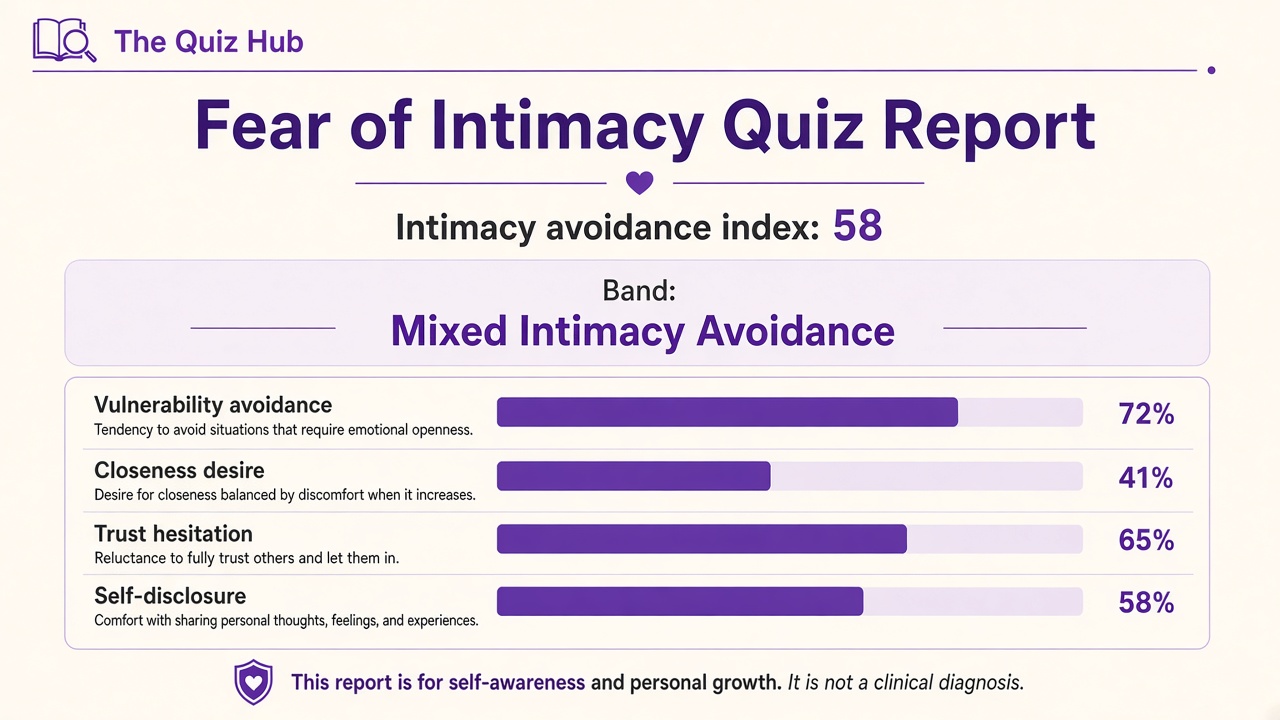
Your growing-apart signal index is the normalized total across all 22 items on a 0 to 100 scale. Domain bars show which drift family drives your result most. The fear-of-intimacy stack chart shows parallel closeness-guarding layers.
| Band | Index range | Typical reading |
|---|---|---|
| Lower Growing-Apart Signal | 0 to 35 | Fewer endorsed growing-apart signals patterns on this self-reflection screener |
| Mixed Growing-Apart Signal | 36 to 65 | Blend of moderate and strong growing-apart signals signals across domains |
| Higher Growing-Apart Signal | 66 to 100 | Frequent growing-apart signals signals on this entertainment or self-reflection screener |
What your report looks like
What this quiz can and cannot tell you
Can tell you
- How often you report growing-apart patterns on this screener
- A growing-apart signal index and four domain bars plus fear-of-intimacy stack
- Early vocabulary for drift conversations when both partners consent
- A baseline before couples therapy intake
Cannot tell you
- Label your partner as checked out from your side alone
- Replace couples therapy or safety planning for abusive dynamics
- Predict whether a relationship will end
- Separate normal busy seasons from chronic drift without context
Growing-apart signals vs fear of intimacy quiz
The fear of intimacy quiz on The Quiz Hub maps closeness-guarding patterns. This are we growing apart quiz maps whether emotional distance, routine drift, avoidance, and future fade feel frequent lately using relationship frequency items.
Sample items ask how often you feel like roommates or avoid hard talks. Pair with our bird test relationship quiz for everyday bid patterns.
| Test | Focus |
|---|---|
| Fear of intimacy quiz | Closeness-guarding patterns rather than partnership drift |
| Bird test relationship | Gottman bid responsiveness on small shares |
| Are my needs being met quiz | Gottman needs fulfillment domains |
Are We Growing Apart FAQ
What does this are we growing apart measure?
22 frequency items map to four domains plus a fear-of-intimacy stack. You receive a growing-apart signal index from 0 to 100. Self-reflection only.
What is the fear-of-intimacy stack?
A second results chart with vulnerability pull-back, trust hesitation, self-disclosure limits, and closeness anxiety adapted to this topic.
How long does the quiz take?
About undefined minutes for 22 items with session autosave.
Who reviewed this content?
Dr. James Whitfield, PhD reviewed the test framing and result explanations. See our editorial policy for review standards.
Does a high score mean we are definitely breaking up?
No. It describes drift patterns you notice on these items. Many couples repair drift with therapy, date nights, or honest talks when both partners engage.
Can I retake the quiz?
Yes. Session data saves in your browser until you clear it or retake from results.
Reviewed by