What this vaccine hesitancy scale measures
This anti vaccination attitudes scale estimates self-reported hesitancy patterns inspired by vaccine confidence research such as the Larson group Vaccine Confidence Project frameworks, simplified for online self-reflection. Twenty-two original agree-disagree items group into safety doubts, institutional distrust, autonomy values, and information source habits. Each item also maps to a fear-of-intimacy stack layer. A second results chart inspired by FOIS-style intimacy avoidance themes from Descutner and Thelen (1991), adapted to this topic. Your vaccine hesitancy signal index averages these patterns into a 0 to 100 score where higher numbers mean more hesitancy endorsement on this screener, not a label of anti-vax identity.
Safety doubts
Side-effect worry, long-term unknowns, and waiting for more real-world years of data.
Institutional distrust
Skepticism toward pharma profit, agency messaging, and media campaign tone.
Autonomy values
Personal choice framing, mandate resistance, and feeling judged about status.
Information sources
Social media reliance, anecdote weight, and expert versus influencer trust.
How it works
Answer 22 agree-disagree items
Rate each agree-disagree statement from Strongly disagree to Strongly agree. You click Next after each answer.
Items map to domains and intimacy stack
Answers accumulate percentages for four primary domains plus four fear-of-intimacy stack layers.
View index, band, and charts
Results show Lower, Mixed, or Higher signal bands with domain bars and stack chart.
Take the anti vaccination attitudes scale
Complete 22 items to receive your vaccine hesitancy signal index, four domain bars, fear-of-intimacy stack chart, and band label for clinician conversations.
What your result means
Your vaccine hesitancy signal index is the normalized total across all 22 items on a 0 to 100 scale. Higher scores mean more hesitancy endorsement on this screener. Domain bars show which attitude family drives your result most. The fear-of-intimacy stack chart shows closeness-guarding layers that sometimes pair with medical mistrust.
| Band | Index range | Typical reading |
|---|---|---|
| Lower Vaccine Hesitancy Signals | 0 to 35 | Fewer endorsed hesitancy patterns; still room for honest questions with clinicians |
| Mixed Vaccine Hesitancy Signals | 36 to 65 | Blend of trust and doubt worth exploring with credible sources |
| Higher Vaccine Hesitancy Signals | 66 to 100 | Frequent hesitancy signals; seek clinician dialogue, not online diagnosis |
What your report looks like
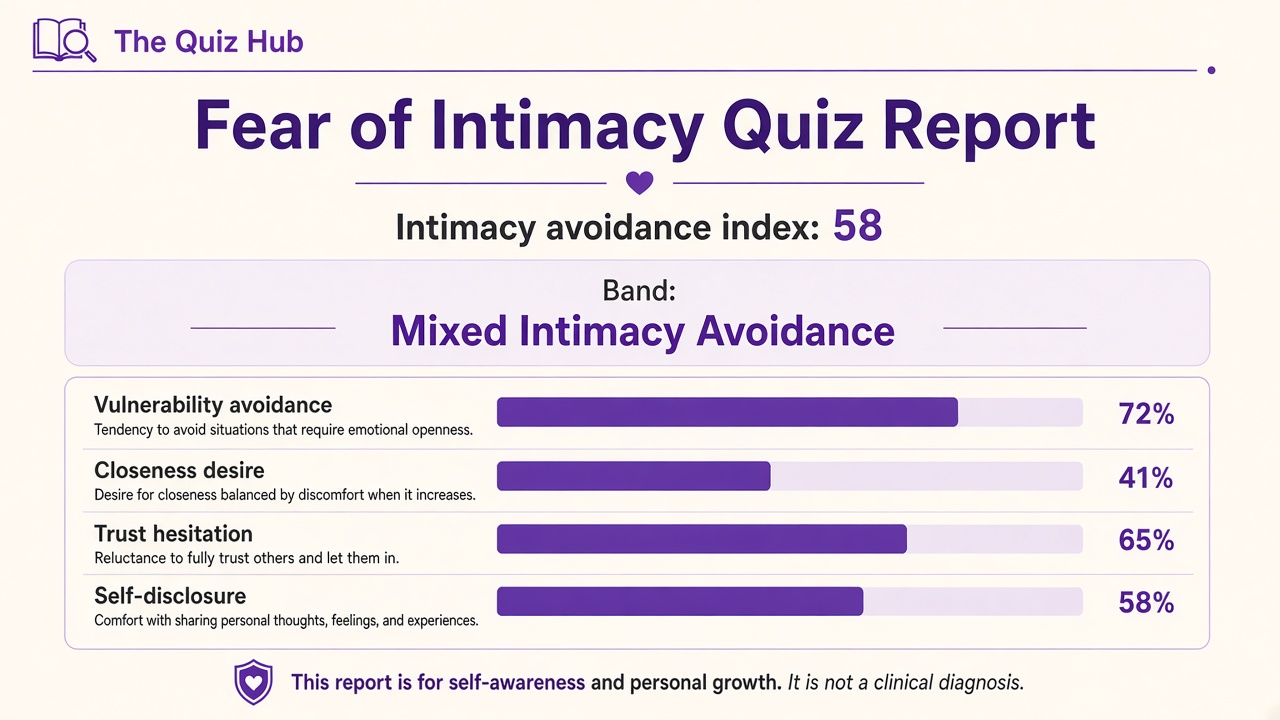
What this quiz can and cannot tell you
Can tell you
- How you report vaccine attitude patterns on this screener today
- A vaccine hesitancy signal index and four domain bars plus fear-of-intimacy stack
- Which domain (safety, institutions, autonomy, sources) feels strongest
- A baseline before clinician visits or after major news events
Cannot tell you
- Tell you whether to vaccinate yourself or your children
- Diagnose medical contraindications or allergy risk
- Replace CDC, WHO, or personal clinician guidance
- Predict voting behavior or moral character from attitude scores
Vaccine attitude scales vs medical advice
Debate threads rarely show domain-level hesitancy or intimacy-stack patterns that appear when medical trust overlaps relational trust. This scale adds a 0 to 100 index with four domains inspired by vaccine confidence research, not a replacement for clinical counseling.
Sample items ask whether you weight friend anecdotes equally with population studies or distrust agencies when leadership changes. Pair with personality psychology hub siblings for broader belief-pattern screeners. Browse CDC or WHO schedule pages for factual dosing, not this quiz.
| Test | Focus |
|---|---|
| Fear of intimacy quiz | Closeness avoidance when medical mistrust affects relationships |
| Am I sick quiz | Acute illness symptom frequency, not vaccine attitudes |
| Big Five personality test | Trait openness and conscientiousness, not vaccine-specific beliefs |
Anti Vaccination Attitudes Scale FAQ
What does this anti vaccination attitudes scale measure?
22 agree-disagree items map to safety doubts, institutional distrust, autonomy values, and information sources plus a fear-of-intimacy stack. You receive a hesitancy index from 0 to 100. Not medical advice.
Does a high score mean I am anti-vax?
No. It means your responses endorse more hesitancy patterns on this screener today. Attitudes shift with news, experiences, and clinician conversations.
Can this quiz tell me whether to vaccinate?
No. Discuss personal medical history, allergies, and timing with licensed clinicians or local health departments.
What is the fear-of-intimacy stack?
A second chart with vulnerability pull-back, trust hesitation, self-disclosure limits, and closeness anxiety adapted to health attitude topics.
How long does the scale take?
About 5 minutes for 22 items with session autosave.
Who reviewed this content?
Dr. James Whitfield, PhD, reviewed the test framing and result explanations. See our editorial policy for review standards.
Reviewed by