
What this quiz measures
This analyzing your limitations quiz screens blind spot awareness, feedback receptivity, growth mindset, and defensive patterns inspired by Carol Dweck growth mindset research themes and workplace feedback literature. Twenty-two agree-disagree items map to four domains. Each item also maps to a fear-of-intimacy stack layer when admitting weakness feels unsafe.
Blind spot awareness
Naming recurring weaknesses, conflict loops, and skills you avoid because they expose insecurity.
Feedback receptivity
Welcoming critique, asking clarifying questions, and trialing suggestions before dismissing them.
Growth mindset
Treating limits as trainable, running small experiments, and comparing yourself to your past self.
Defensive patterns
Noticing excuse-making, subject changes, and shame spikes when limitations surface.
How it works
Three steps from first question to your report with domain bars and fear-of-intimacy stack.
Answer 22 agreement items
Rate how much you agree with each statement. You click Next after each answer.
Items map to limitation domains
Your answers accumulate percentages for four awareness domains plus intimacy stack layers.
View index and dual charts
Results show your self-limitation awareness index, band label, domain bars, and intimacy stack chart.
Take the analyzing your limitations quiz
Answer 22 original items about limitation awareness. Your responses produce an index from 0 to 100, four domain scores, and a fear-of-intimacy stack chart.
Opens in a focused modal. No account required. Results stay on screen.
What your result means
Your self-limitation awareness index is the normalized total across all items on a 0 to 100 scale. Higher scores mean more agreement on this screener. Domain bars show whether blind spots, feedback openness, growth mindset, or defensiveness drive your result most.
| Band | Index range | Typical reading |
|---|---|---|
| Lower Self-Limitation Awareness Signals | 0 to 35 | Fewer endorsed patterns on these self-report items |
| Mixed Self-Limitation Awareness Signals | 36 to 65 | Blend of stronger and moderate domain scores |
| Higher Self-Limitation Awareness Signals | 66 to 100 | Frequent endorsement worth reflection and practice |
What your limitations quiz report looks like
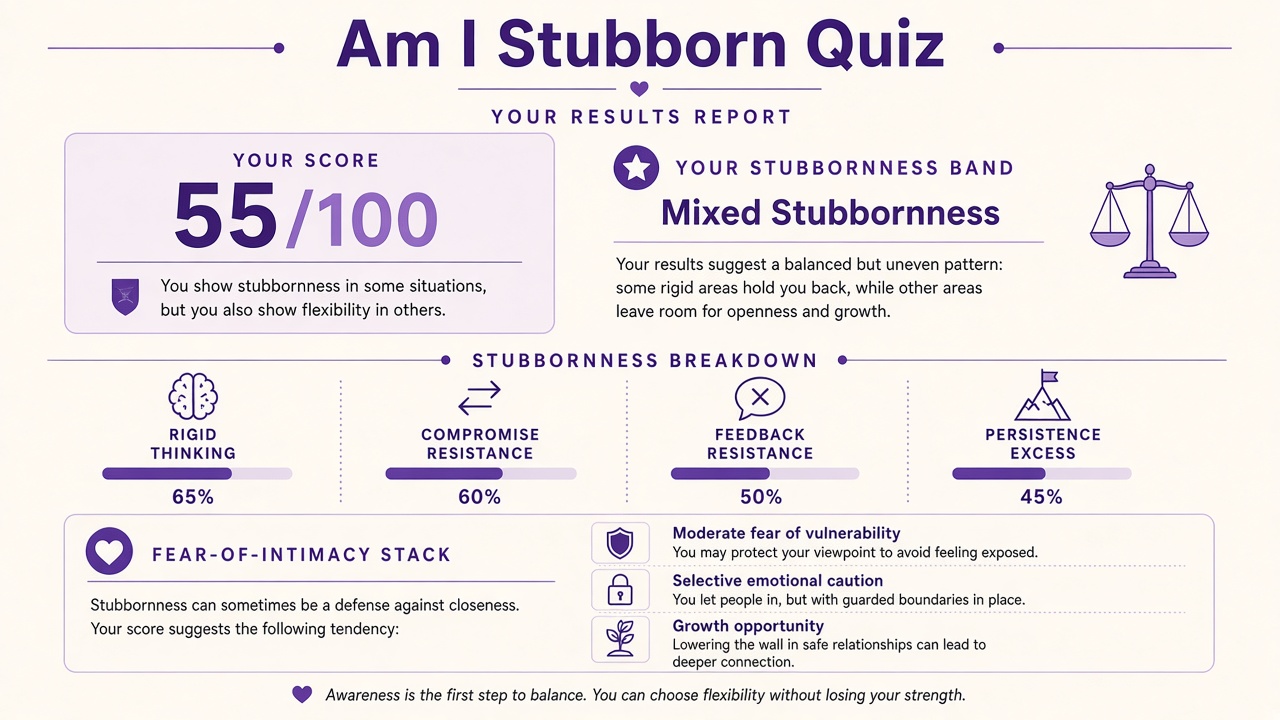
After all 22 items, you get a self-limitation awareness index, band label, four domain bars, and a fear-of-intimacy stack chart.
What this quiz can and cannot tell you
Can tell you
- How strongly limitation awareness patterns showed up in this self-report screener
- An index from 0 to 100 plus fear-of-intimacy stack index with domain bars
- Which awareness domain feels strongest in your current answers
- A starting point for coaching, journaling, or therapy conversation
Cannot tell you
- Clinical diagnosis of personality disorders or narcissism
- Replacement for a workplace 360 review or manager assessment
- Proof you cannot improve in areas where you score low today
- Prediction of leadership potential or relationship success
Why people search analyzing your limitations quizzes
People search analyzing your limitations when feedback stings, the same conflict repeats, or growth goals stall. Psychologist Carol Dweck popularized growth mindset language about trainable skills versus fixed labels. Feedback research in workplaces shows defensiveness often blocks the very data people say they want.
This screener names four awareness domains, scores an index from 0 to 100, and adds a fear-of-intimacy stack when vulnerability feels dangerous. Compare with our big five personality test for broad trait frames rather than limitation-specific habits.
| The Quiz Hub test | What it adds |
|---|---|
| Big Five personality test | OCEAN trait percentages with percentile framing |
| Am I stubborn quiz | Flexibility and rigidity self-report screener |
| Fear of intimacy quiz | Closeness guarding across vulnerability and trust |
| This quiz | Blind spot, feedback, growth, and defensiveness domains with intimacy stack, not broad Big Five traits alone. |
Use high defensiveness scores as a prompt for journaling or therapy, not self-attack. Retake after deliberate feedback practice if you want to track shifts.
Analyzing Your Limitations FAQ
What does the analyzing your limitations quiz measure?
Twenty-two agree-disagree items ask how much you endorse blind spot awareness, feedback receptivity, growth mindset, and defensive pattern habits inspired by growth mindset and feedback education themes. Each item also maps to a fear-of-intimacy stack layer. You receive a self-limitation awareness index from 0 to 100 where higher scores mean more agreement on this screener.
Does a low self-limitation awareness index mean I am narcissistic?
No. Lower scores mean you endorsed fewer awareness items on this screener. Narcissistic personality disorder requires clinical evaluation. This quiz cannot diagnose personality pathology.
What is the fear-of-intimacy stack on this quiz?
The stack chart shows vulnerability pull-back, trust hesitation, self-disclosure limits, and closeness anxiety layers that may pair with hiding weaknesses or rejecting feedback to protect image.
How is this different from the Big Five personality test?
Big Five measures broad OCEAN trait levels with many items per trait. This limitations quiz focuses specifically on blind spots, feedback openness, growth habits, and defensiveness rather than general trait percentages.
Can managers use this quiz for hiring decisions?
No. This is a self-report reflection tool with stated limits. Hiring decisions should use validated job-related assessments and structured interviews, not recreational quizzes.
Who reviewed this content?
Dr. James Whitfield, reviewed the test framing and result explanations. See our editorial policy for review standards.
Reviewed by
