Gender Therapist: What They Do and Who They Help
Last updated:
Educational only: This article explains gender-affirming psychotherapy. It is not medical advice, legal guidance, or emergency care. If you are in crisis, call or text 988 (U.S.), contact Samaritans at 116 123 (UK), or use local emergency services. If you are not safe at home because of your identity, contact local LGBTQ+ advocacy or domestic violence resources before sharing details with family.
A gender therapist is a licensed clinician who helps you explore gender identity, reduce distress, and build a life that fits your values without pressuring you toward a preset outcome. Affirming care is not conversion therapy: ethical providers follow positions from the American Psychological Association (2021) and World Professional Association for Transgender Health (WPATH) Standards of Care (8th ed., 2022) that reject attempts to change core identity. Sessions may focus on naming yourself, navigating family or workplace reactions, coping with dysphoria, or preparing coordinated medical steps when you choose them. The therapist's job is skilled listening and evidence-based coping, not deciding your gender for you.
Tips at a glance
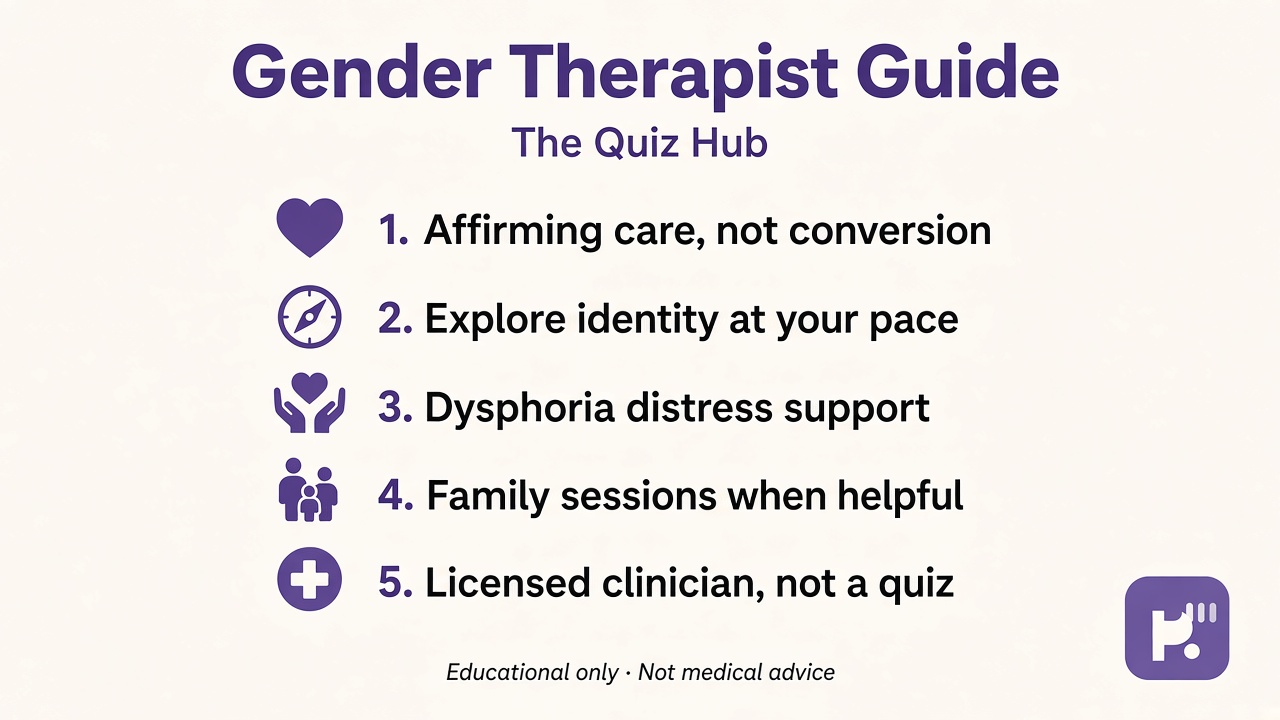
Key takeaways
- Gender therapists hold standard licenses (psychology, counseling, social work) plus competency training.
- Affirming therapy supports your stated goals; it does not try to make you cisgender.
- Medical transition questions involve doctors; therapy letters are one piece of a larger plan.
- Family sessions can help when loved ones need education without centering their comfort over your safety.
- Telehealth works for many clients; know crisis limits before you start.
- Online screeners on our mental health clinical hub organize topics for intake, not diagnosis.
What happens in gender-affirming therapy
First sessions usually cover consent, confidentiality limits, your name and pronouns, and what you hope to change. The therapist may ask about mood, trauma, substance use, and support systems because those factors affect safety and pacing. Exploration can include timelines of gender feelings, cultural or religious context, and fears about rejection. If you already use a new name socially, therapy can rehearse hard conversations and grief that sometimes surfaces even in supportive transitions.
For gender dysphoria distress, clinicians teach grounding, self-compassion, and practical steps such as voice practice, wardrobe experiments, or binding safety education within medical guidance. When depression or anxiety spikes, treatment may blend gender work with CBT skills or trauma care. Couples or family sessions can clarify boundaries: affirming a trans partner is not the same as pressuring them to come out on your timeline.
Documentation for hormones or surgery varies by country, insurer, and clinic. Therapists explain what a letter includes, how many sessions are typical, and what to do if you disagree with a requirement. You can ask for a second opinion from another affirming clinician if a gatekeeping process feels arbitrary.
Affirming care versus conversion practices
Conversion practices (sometimes called reparative therapy) aim to force alignment with birth-assigned gender. Major U.S. medical groups oppose them for minors and adults because they increase shame, depression, and suicidality risk. Ethical gender therapy instead helps you sort authentic wishes from internalized stigma. That can mean transition, partial social steps, or deciding not to pursue medical care while still living with self-respect. The clinician should never tie care to a promise that you will "detransition" or stay cisgender.
Red flags in a first consult include blaming your identity on trauma alone, refusing to use your name, suggesting prayer instead of mental health care, or rushing medical referrals without assessment. Green flags include transparent credentials, clear limits of telehealth, and respect for your pace. Review how licensed psychologists handle duty to protect in our ethical principles of a psychologist article.
Gender therapist fit checklist
| May be a good fit if you... | Consider other or additional care if you... |
|---|---|
| Question gender identity or expression and want a confidential space to explore | Need emergency psychiatric hospitalization for active suicidal planning tonight |
| Experience distress when body, voice, or pronouns do not match your sense of self | Want hormone prescriptions without any mental health assessment (see a prescriber directly per local rules) |
| Need support coming out to family, workplace, or school with safety planning | Are in active domestic violence and have not yet secured safe housing or legal advice |
| Want help coordinating letters, medical visits, and coping skills in one plan | Primary issue is untreated psychosis or mania without psychiatric stabilization |
| Seek couples help so partners learn affirming communication | Partner demands conversion-style outcomes; individual safety work may come first |
How gender therapy differs from a primary care visit
Primary care doctors manage labs, hormones when prescribed, and general health. Gender therapists focus on emotional processing, identity integration, minority stress, and behavioral coping. Some clinics embed both on one team; others require separate referrals. Neither role should shame your questions about fertility, sexuality, or regret fears. Honest dialogue about uncertainty is part of ethical care, not a sign you are "not trans enough."
Psychiatry may enter the picture when medications for depression, ADHD, or PTSD are needed. Coordinate releases so providers do not work at cross purposes. If relationship conflict adds stress, pair individual gender work with couples sessions that use skills from resources like our bids for connection guide and compromise in relationships article. Misaligned expectations about transition pace are common; structured talks reduce harm.
Online therapy and access
Telehealth expanded access for rural clients and those without local affirming providers. Secure video can work well for talk therapy when you have private space and stable internet. Therapists must be licensed where you are located during sessions and should collect emergency contacts in your area. Read limits on crisis response in our digital psychologist and online therapy overview before you choose a platform.
Messaging-only services are not equivalent to weekly psychotherapy unless a licensed clinician provides documented treatment with clear response times. Avoid coaches marketing "gender healing" without licenses. When you are ready to book, use scripts from how to formulate a request for a psychologist to ask HR, campus counseling, or a partner for logistical support.
Communication, identity, and partners
Gender exploration can change how you ask for intimacy, boundaries, and household roles. Partners may need education on deadnaming, microaggressions, and why small affirmations matter. Therapy can rehearse scripts without putting all emotional labor on the trans person. Cisgender partners sometimes benefit from their own individual sessions to process bias they did not know they held. Shared tools such as our communication styles in relationships quiz can open curiosity about habits, while our emotional labor in relationships piece helps split invisible tasks fairly during stressful transition periods.
Limits of quizzes and self-help
The Quiz Hub offers screeners for mood, anxiety, attachment, and communication patterns. None can confirm gender identity or replace WPATH-informed assessment. Use results to list questions for intake: "I scored high on social anxiety; could that overlap with fear of using public restrooms?" Clinicians integrate your narrative, timeline, and safety context. Medical decisions belong with medical teams after informed consent.
When to seek crisis or advocacy support
If you are considering suicide because of rejection or discrimination, contact 988 or local emergency services. The Trevor Project (U.S.) offers LGBTQ+ youth crisis chat and phone support. If a clinician pressures you toward conversion goals, document what was said and seek another provider. Licensing boards accept complaints about ethical violations. You deserve care that respects your identity without coercion.
Related quizzes on The Quiz Hub
- Mental health clinical hub for depression, anxiety, and related screeners to discuss at intake.
- Communication styles in relationships quiz when partner talks stall during transition stress.
Frequently asked questions
What does a gender therapist do?
A gender therapist is a licensed mental health clinician with training in gender identity, expression, and the stress of minority status. They help clients explore identity, cope with gender dysphoria distress, plan social transition steps, and coordinate care with medical providers when hormones or surgery are on the table. They also support families adjusting to a loved one's identity. They do not replace endocrinologists or surgeons.
Is gender therapy the same as conversion therapy?
No. Affirming gender therapy follows major medical associations that oppose trying to change a person's gender identity. Conversion practices aimed at forcing cisgender outcomes are unethical and harmful. Ethical clinicians help you clarify your own goals, whether that includes transition, partial steps, or no medical change.
Do I need a diagnosis to see a gender therapist?
Clinicians use diagnostic frameworks such as gender dysphoria in the DSM-5-TR when insurance or medical referrals require documentation. Not everyone who questions gender fits that label, and questioning alone is not a disorder. Intake should feel exploratory, not interrogative. Ask how the therapist documents care for your payer.
Can a gender therapist prescribe hormones?
Psychologists, social workers, and counselors generally cannot prescribe medication. They may write letters supporting hormone therapy when WPATH-style standards and local rules apply. Prescribing belongs to physicians, nurse practitioners, or physician assistants within their scope. Your therapist should explain the handoff clearly.
How do I find an affirming gender therapist near me?
Search professional directories that filter for LGBTQ+ competency, verify license status on your state board site, and ask direct questions in a consult call about affirmation and conversion practices. Telehealth expands access; read our digital psychologist guide for privacy and crisis limits online.
Can online quizzes tell me if I need a gender therapist?
No quiz can confirm identity or dysphoria. Screeners may prompt reflection about mood, anxiety, or relationship stress that often co-occur. Use results to prepare questions for intake, not as a verdict. Only a licensed clinician can assess safety, trauma, and treatment options with you.
Sources
- American Psychological Association. (2021). Transgender people and gender identity.
- World Professional Association for Transgender Health. (2022). Standards of Care for the Health of Transgender and Gender Diverse People, Version 8.
- American Psychiatric Association. (2022). Diagnostic and Statistical Manual of Mental Disorders (5th ed., text rev.). Gender dysphoria criteria.
- Coleman, E., et al. (2022). Standards of Care Version 8 executive summary. International Journal of Transgender Health, 23(sup1), S1-S259.
- Substance Abuse and Mental Health Services Administration. (2023). LGBTQI+ behavioral health equity resources.