Questions to Ask a Psychologist: What Patients Ask in First Sessions
Last updated:
Educational only: This article lists common questions patients ask psychologists. It is not therapy, legal advice, or emergency care. If you might hurt yourself or cannot stay safe, call or text 988 (U.S.), contact Samaritans at 116 123 (UK), or use local emergency services. See our editorial policy.
Questions to ask a psychologist in a first session usually cover confidentiality, fees, training, therapy approach, and crisis plans. You do not need a polished story to book intake. Psychologists trained under the American Psychological Association Ethics Code (2017) owe you informed consent, competence within their scope, and honest limits on what therapy can promise. This guide maps frequent patient worries to plain answers so you can compare clinicians, prepare for telehealth or in-office visits, and know when screeners support reflection rather than diagnosis.
Tips at a glance
Key takeaways
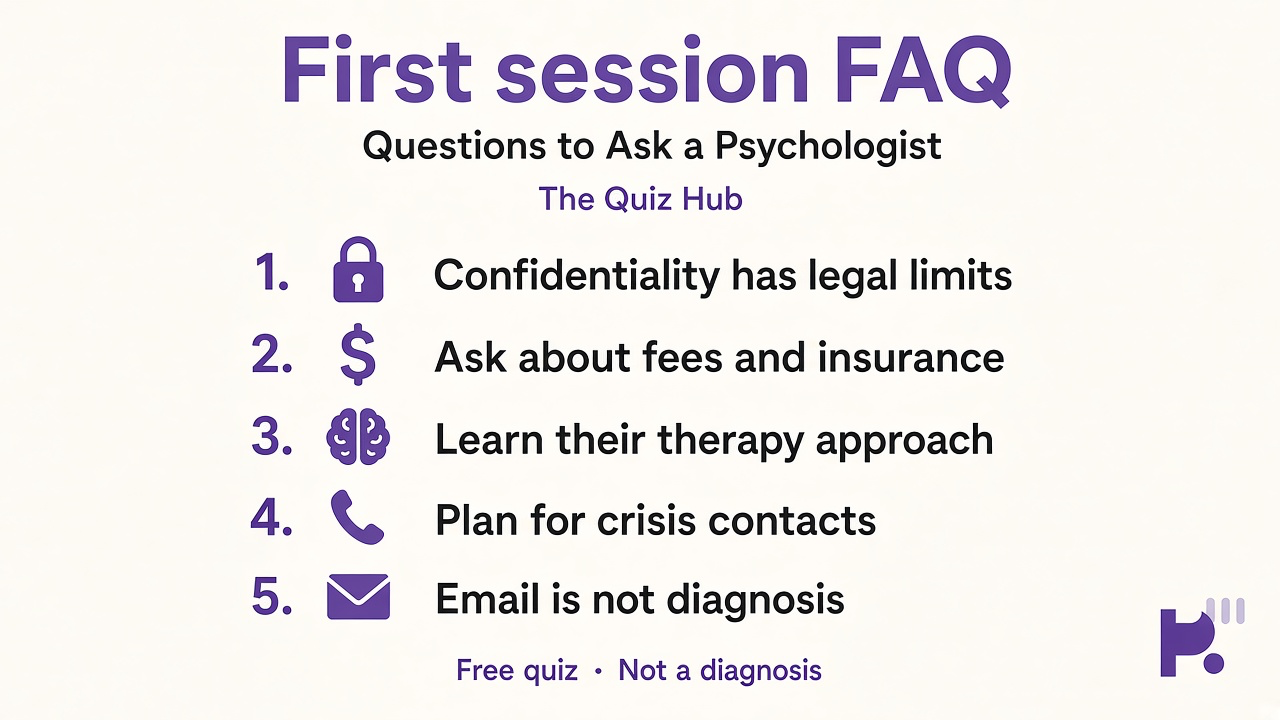
- First sessions are for fit, logistics, and consent; you are interviewing the clinician too.
- Confidentiality protects privacy but has legal and safety exceptions you should hear upfront.
- Fees, insurance, and telehealth rules vary; ask before you assume coverage.
- Psychologists cannot diagnose from a single email or casual quiz result.
- 988 handles urgent safety; therapy handles patterns over weeks and months.
- Scripts for asking HR or family for care live in our request-for-a-psychologist guide.
Common patient questions and what psychologists can answer
Search results often list generic icebreakers without explaining professional boundaries. The table below pairs real intake topics with what a licensed psychologist can discuss in the first one or two meetings. Use it to draft your own list. If a topic feels too personal for session one, ask when it usually enters treatment.
| Patient question theme | What you can learn in session | Typical limits |
|---|---|---|
| Is what I say private? | State rules, mandatory reporting, and how records are stored | Cannot promise secrecy if harm to self, others, or abuse is disclosed |
| What is your license and specialty? | Degree, license type, areas of expertise, supervision if trainee | Cannot practice outside scope (for example prescribing medication if not authorized) |
| How do you work? | Session length, homework, couples vs individual rules, measurement tools | Cannot guarantee outcomes or fixed timelines for complex trauma |
| What will this cost? | Fee, insurance participation, superbills, sliding scale options | Cannot know your exact insurer reimbursement without verification |
| Can you see me online? | Telehealth platform, privacy steps, state licensure where you sit | May decline if risk level needs in-person or higher care |
| What if I need help between sessions? | Crisis numbers, on-call policies, hospital criteria | Most solo practices are not 24/7 crisis centers |
Ethical psychologists welcome questions about their obligations. Our ethical principles overview explains beneficence, nonmaleficence, and justice in everyday language so you can spot red flags such as dual relationships, pressure to pay cash only with no receipt, or refusal to discuss licensure.
Confidentiality: what patients ask most often
Confidentiality is the backbone of therapy, yet it is not a blank check. In the United States, HIPAA governs many health records, while state law defines when psychologists must report child abuse, elder abuse, or imminent danger. Tarasoff-style duties can require warning identifiable victims when a credible threat exists. Minors may have reduced privacy depending on state and who consents to treatment.
Ask explicitly: Who can see my chart? Will my employer receive diagnoses if I use insurance? Can notes be subpoenaed? If you share a computer at home during telehealth, discuss device privacy with your clinician. Couples therapy often includes agreements about what stays in the room versus what each partner may repeat later. Understanding limits early prevents betrayal feelings when a psychologist must act on safety law.
Fees, insurance, and digital access
Cost questions belong in the first call, not after three sessions. Request the CPT codes they bill, whether they are paneled with your insurer, and what happens if authorization lapses. High-deductible plans may mean you pay full fee until the deductible clears. Some psychologists offer limited pro bono slots; university clinics may use graduate trainees with licensed supervision.
Online therapy expanded access but added new FAQs: Is the platform encrypted? What if I travel across state lines? Read our digital psychologist guide for telehealth consent, Wi-Fi safety, and how to test audio before deep disclosure. If broadband or childcare blocks appointments, ask about asynchronous options or shorter check-ins while you stabilize logistics.
Sample wording for the front desk
- "I have Plan X. Are you in network, and what is my expected copay for 90834 psychotherapy?"
- "Do you offer telehealth in the state where I will be sitting?"
- "What is your cancellation fee, and how much notice do you require?"
- "If I need a letter for work or school, what is your policy and fee?"
Therapy approach and what to expect over time
Patients often ask whether a psychologist uses cognitive behavioral therapy, acceptance and commitment therapy, psychodynamic exploration, or trauma-focused models such as prolonged exposure or EMDR when trained. No single brand fits every problem. A competent clinician explains why they lean on certain methods for your goals and how they will know if progress stalls.
First sessions usually include history gathering, risk screening, and collaborative goal setting. You might complete questionnaires about mood, sleep, or trauma history. Psychologists adjust pace so you are not flooded on day one. If you need medication, they coordinate with prescribers; in many states psychologists do not prescribe unless they hold additional certification.
When quizzes help and when they mislead
Self-report screeners can organize symptoms before intake. They are not diagnostic interviews. Validated tools such as the Patient Health Questionnaire (PHQ-9) or Generalized Anxiety Disorder scale (GAD-7) appear in clinics because they track change over time, not because a single score labels you forever.
Browse the Mental Health & Clinical category for screeners with stated limits. The anxiety test highlights worry and body tension patterns worth mentioning at intake; it does not replace a licensed assessment or rule out medical causes of panic. Bring printouts or screenshots to session if your clinician welcomes them.
Red flags versus normal awkwardness
First meetings feel stiff. Red flags differ: refusal to explain confidentiality, romantic or business proposals, pressure to pay off-platform, guarantees of cure, or mocking your questions. Ethical psychologists document boundaries, offer referrals when fit is poor, and discuss termination plans if either side needs to stop.
Cultural mismatch can be addressed with feedback if the psychologist shows curiosity. Repeated invalidation of identity, trauma, or disability needs a new provider. You may ask whether they have supervision or consultation for complex cases; good clinicians seek peer input without sharing your name recklessly.
Preparing your own FAQ list
Write five questions on paper or your phone before the visit. Prioritize safety if you have self-harm thoughts, domestic violence exposure, or eating disorder medical risk. Bring insurance cards, medication lists, and prior therapy summaries if you have them. If reading is hard under stress, ask a trusted person to sit in the waiting area while you speak alone with the psychologist.
After session one, note whether you felt heard, whether goals felt mutual, and whether logistics are sustainable. Therapy works best when attendance is steady. If transportation, shift work, or childcare blocks you, problem-solve early rather than ghosting appointments, which some clinics penalize with fees or discharge.
Frequently asked questions
What should I ask a psychologist in the first session?
Ask how confidentiality works in your state, what their training and license type are, which problems they treat most often, how they structure sessions, and what happens if you miss an appointment. Request a plain-language summary of their approach (for example CBT, psychodynamic, or integrative). Ask how they handle crises between sessions and whether they coordinate with your physician if you take medication. No question is too basic for intake.
Are therapy sessions completely confidential?
Licensed psychologists follow ethics codes that protect privacy, but confidentiality is not absolute. Clinicians may need to break secrecy when someone is at imminent risk of harm, when child abuse must be reported, or when a court orders records. Many practices send routine billing codes to insurers, which can reveal that you received mental health care. Ask your psychologist to explain limits before you share sensitive material.
How do psychologists handle fees, insurance, and telehealth?
Ask for the session fee, whether they are in-network for your plan, and what your copay or deductible might be. Confirm how telehealth is billed compared with in-person visits. Some psychologists offer sliding scales or trainee slots with supervision. Get cancellation policies in writing. If cost blocks care, ask about community clinics, training centers, or employer assistance programs before you drop out entirely.
What if I am not sure my psychologist is a good fit?
A strong alliance often matters as much as technique. You can ask whether the psychologist would consider a brief trial period, how they respond to feedback, and whether they refer out when specialty care is needed. If you feel dismissed, rushed, or unheard after two or three sessions, discuss it directly or seek a second opinion. Switching clinicians is common and not a personal failure.
Can a psychologist diagnose me from one email or online quiz?
Ethical practice requires adequate assessment, informed consent, and usually multiple contacts before formal diagnosis. A single email, social media message, or self-report screener cannot replace a clinical interview. Quizzes on The Quiz Hub highlight symptoms to discuss with a licensed provider; they do not establish a diagnosis or treatment plan.
When should I call 988 instead of waiting for therapy?
Call or text 988 (U.S. Suicide and Crisis Lifeline) when you might hurt yourself, cannot stay safe tonight, or need immediate emotional support and safety planning. Therapy intake is for ongoing care scheduled days or weeks ahead. Voicemail at a private practice is not a crisis line. Use emergency services when medical risk is present.
Sources
- American Psychological Association. (2017). Ethical principles of psychologists and code of conduct. APA.
- American Psychological Association. (2023). Understanding psychotherapy and how it works.
- U.S. Department of Health and Human Services. (2022). HIPAA privacy rule overview.
- Substance Abuse and Mental Health Services Administration. (2024). 988 Suicide and Crisis Lifeline.
- Kroenke, K., Spitzer, R. L., & Williams, J. B. (2001). The PHQ-9: Validity of a brief depression severity measure. Journal of General Internal Medicine, 16(9), 606-613.